De Partu – Workshop 31st May

This gallery contains 2 photos.

Click on the thumbnail images to view details of this event:

More Galleries | Leave a comment

Prof Helen King (Open University) is Speaking at the Wellcome on 19 February 2013

 Professor  Helen King (Open University) 19 February 2013 at 18.00hrs.

‘Agnodice’s First Patient: Gendering Childbirth in Antiquity and Early Modern Europe’.

More details


Posted in Announcements | Leave a comment

John Snow Celebration Event at the University of York – Friday 15th March 2013 – admission free

John Snow Celebration Event at the University of York 

Friday 15th March 2013

John Snow Event – Admission Free

Posted in Announcements | Leave a comment

February 1st: it’s the day of the midwife!..

I have been advised that today, February 1st,  is St Bride’s day – the Celtic patron saint for midwives.  The pagan goddess  Brigit was  associated with fertility, childbirth, and cattle. On her feast day – which is also the Gaelic spring festival of Imbolc – Highland girls made the ‘last sheaf’ of the previous harvest into images of her, which were laid in a decorated cradle called ‘Bride’s bed’. Her flower is the snowdrop…

In Ireland it is  St Brigid’s day,   where ‘the  Bride of Kildare’ is said to have helped the Virgin give birth to Jesus and in so doing became known as  the protector of pregnant women and midwives. She also cared for Mary’s cows, hence her other title, ‘Christ’s milkmaid’.

For general (non academic purposes ) interest…

Wikipedia article: Brigit of Kildare

Have a good day,

Janette Allotey

Posted in Announcements | Leave a comment

Home birth debate at University of Cambridge

This may be of interest to some of the list subscribers…
Best wishes,
Janette Allotey:

Date: Mon, 15 Oct 2012 10:27:32 +0100
From: Salim Al-Gailani
Subject: Debating Reproduction at the Cambridge Festival of Ideas

Cambridge Festival of Ideas
Debating Reproduction: Hospital Birth

1st November 2012
5.30pm – 7pm
Mill Lane Lecture Room 9, 8 Mill Lane
University of Cambridge

Around 1900, very few babies in Britain were born in hospitals; by the end
of the century, hardly any were not. The Wellcome Trust funded ‘Generation
to Reproduction Project’ presents a debate on the history of medical and
social issues surrounding this ‘revolution’ in childbirth.

The subject of the debate will be:

‘The hospitalization of childbirth has historically benefited birthing
women less than their doctors.’

In order to focus on historical perspectives, the debate will be framed
around the causes of the transition to the hospital and what it has meant
for birthing women, midwives and doctors. We ask why the place of birth
became so controversial in the decades after World War Two and continues to
polarize opinion.

Our panel includes: Cathy Warwick (General Secretary, Royal College of
Midwives), Hilary Marland (Professor of History, University of Warwick),
Tania McIntosh (Lecturer in midwifery and history of midwifery, University
of Nottingham), Joanna Kavenna (Novelist, author of The Birth of Love,
2010)

Bookings are filling rapidly. There is no charge, but pre-booking is
essential.

To book, email: sb491@cam.ac.uk

Dr Janette Allotey
University of Manchester
School of Nursing, Midwifery and Social Work,
University Place
Oxford Rd
Manchester
M13 9PL
tel +44(0)161 306 7732
Reception +44(0)161 306 7732

Janette C Allotey
Read more: Janette C Allotey

Campus map: www.manchester.ac.uk/visitors/travel/maps/numerical

Chair of De Partu: History of Childbirth Research Group
www.departu.org.uk

Posted in Announcements | Leave a comment

New book – Nursing and midwifery in Britain since 1700

Nursing and midwifery in Britain since 1700, co-edited by Professors Billie Hunter and Anne Borsay, has just been published by Palgrave Macmillan.

It is a collection of essays that explore and compare the distinct histories of nursing and midwifery in Britain from the beginning of the eighteenth century to the modern day. The book is aimed at students and practitioners. There are chapters by De Partu members Alison Nuttall, Helen King and Christine Hallett,  as well as by Pat D’Antonio, Winifred Connerton, Anne-Marie Rafferty and Jane Sandall. A snip at £19.99!
More information


Posted in Announcements | Leave a comment

Retelling familiar tales of pregnancy and birth: Oxford 3rd-4th July 2012

This conference brings together leading specialists from a range of the medical humanities to explore the trope of the retelling of stories about pregnancy and birth. Taking a very broad geographic and chronological focus, our objective is to encourage innovative interdisciplinary exchanges by addressing the following questions:

How did/do methods of diffusion (print culture, images, drama, ultrasound and modern medical technologies) encourage the retelling of familiar birthing tales, and how were/are new ones added?

Why did/do some stories of pregnancy and birth circulate more widely than others?

When stories are retold, which details of the original are always retained, which are lost in the retelling, and how and why do new accretions creep into the story?

Papers by some twenty researchers, from humanities, social sciences and health care, will be given over the two days, with generous time allowed for audience discussion and questions. We are grateful to the Wellcome Trust for a grant subsidising the conference.

Janette Allotey (Manchester), Helen King (Open University) Valerie Worth (Oxford)

Provisional programmeas (6/6/12)

Day 1:

11-12.15

Opening session: organisers’ introduction

Sharon Aviva Jones (Applied Drama, Goldsmith’s, London), ‘The Performance of Childbirth: Birth Stories and Rites of Passage in the UK today’

 Lisa Hinton (Health Experiences Research Group, Oxford), ‘Healthtalkonline and stories of birth’

 12.15 lunch

 14.00 Birth in fiction

 Véronique Duché (Languages and Literatures, Melbourne), ‘The birth of/in French fiction (16th Century)’

 Charlotte Woodford (German, Cambridge), ‘Feminist re-tellings of pregnancy and birth experiences in fin de siècle Germany’

 Giulia Zanini (Political and Social Sciences, Fiesole, Italy – PhD) ‘“The most beautiful thing that I remember about my childhood is the story of my birth”. Italian intended parents of donor-conceived children and the creation of family histories and fairy tales’

 15.30 teabreak

 16.00 Telling tales under God

 Rebecca Johnson (History, Princeton, US – PhD), ‘Dolores spatio quatuor dierum: Approaching Childbirth in Medieval Catalonia through a Miracle Attributed to Ramon de Peñafort’

 Vina Vaswani (Director, Centre for Ethics, Yenepoya University, Mangalore, India), ‘Reinforcing values in the birth of a baby through mythological/folk tales’

 17.00 Keynote, Monica Green (History, Arizona), “The Travels of Muscio:  Making Medieval Obstetrics out of a Late Ancient Text”

 Day 2:

9.30 The father’s tale
Holly Tucker (French and Italian/History of Medicine, Vanderbilt University, US), ‘Pregnant Men?:  Stories of Atypical Reproduction in Early Europe’

 Angela Davis and Laura King (History, Warwick), ‘Figure of Fun to Birthing Partner? Childbirth stories of and by fathers in post-war Britain’

 11.15 coffee

 11.30 Unusual births or mothers

Theresa Earenfight (History, Seattle), ‘Narratives of Regal Maternity in Late Medieval and Early Modern Spain’

 12.00 Midwives’ responses

Round table discussion

 12.30 lunch

 14.00 Powerful stories

The eighth-month-child: Lesley Bolton (Classics, Calgary), ‘The eighth-month child: Recasting an old medics’ tale: transmission and transformation of theories on inauspicious periods of gestation’

The wandering womb: Alison Klairmont Lingo (History, University of California, Berkeley) and Stephanie O’Hara (French/Women’s and Gender Studies) University of Massachusetts Dartmouth), ‘Capturing the Wandering Womb in the Early Modern Era: Louise Bourgeois and The Compleat Midwifes Practice

15.15 tea

 15.45 Tales from the experts

 The gynaecologist: Ramona A. Braun (History and Philosophy of Science, Cambridge), ‘Against the timebomb: Laparoscopic treatment of the ‘disease’ of ectopic pregnancy in gynaecologists’ accounts of the 1950s’

 The German ‘family midwife’: Jennifer Jaque-Rodney (International Delegate -
German Association of Midwives), ‘Family midwifery. Health promotion through bonding for mother and child’

 The doula: Holly Hendry and Dr Salma Siddique (Life, Sport and Social Sciences, Edinburgh Napier) ‘Stories retold in the spaces between pregnancy and childbirth’

 17.30 Midwives’ panel and general discussion

 Practical details

1) Dates and venue:

The conference will take place in Lady Margaret Hall, one of the colleges of Oxford University, on 3rd and 4th July 2012. Oxford is easily accessible by train or coach, and it is a 20-minute walk from the station to Lady Margaret Hall (or a short taxi ride). ). If you are arriving at Heathrow, there are regular buses to Oxford (Gloucester Green is the terminal you need in the city centre): see http://www.oxfordbus.co.uk/index.php. If you are arriving by car, we recommend you park in one of the city’s ‘park and ride’ car parks, as parking in the city centre is extremely limited!

2) Accommodation

The conference organisers are able to provide accommodation (in single rooms) for those giving papers at one of the north Oxford properties belonging to Trinity College. Other delegates might wish to use the website of rooms available at Oxford colleges to make their own accommodation bookings: http://www.oxfordrooms.co.uk/. Alternatively, information on hotels is available on Oxford city’s tourist website: http://www.oxfordcityguide.com/ee2/index.php?/TouristInfo/

3) Registration:

To register for the conference, please book completing the booking form and emailing it back to valerie.worth@mod-langs.ox.ac.uk by Friday 8th June 2012. Please note that the number of delegates attending is limited, so early booking is advised.

Payment should be made either by cheque (made payable to Trinity College Oxford), drawn on a UK bank, or by debit or credit card (charges to be handled by Trinity College Oxford). Once bookings have closed, you will be sent an email asking you to pay the total due for all bookings by Monday 19th June.

Posted in Announcements, Miscellaneous | Tagged , , , , , | Leave a comment

Brighton born, Sussex bred: the story of Brighton’s maternity hospitals, 1830-2007, by Harry Gaston

Brighton born, Sussex bred: the story of Brighton's maternity homes

This book by Harry Gaston, a local historian, has recently been published. According to the blurb, “Brighton Born, Sussex Bred shows how maternity care has developed over the last 200 years in Brighton and Hove and nationally … Fully illustrated, the book includes the experiences of mothers and midwives from the 1950′s to 1980’s as they tell  their birth stories.”

The book is on sale via the Friends of Brighton and Hove Hospitals at £12.00 per copy including postage and packing: please order using this form.


Posted in Announcements, Book launch | Tagged , , | Leave a comment

Recently published: A social history of maternity and childbirth: key themes in maternity care, by Tania McIntosh

A Social History of Maternity and ChildbirthPublished 5th March 2012 by Routledge – 188 pages

This new work considers the significance of the regulation and training of midwives and doctors, exploring important aspects of maternity care including efforts to tackle maternal deaths, the move of birth from home to hospital, and the rise of consumer groups. Using oral histories and women’s memoirs, as well as local health records and contemporary reports and papers, this book explores the experiences of women and families, and includes the voices of women, midwives and doctors.

Key themes are discussed throughout, including:
•the work and status of the midwife
•the place of birth
•pain relief
•ante- and post-natal care
•women’s pressure groups
•high-tech versus low-tech
•political pressures.

At a time when the midwifery profession, and the wider structure of maternity care, is a matter for popular and political debate, this book is a timely contribution.

Tania McIntosh is the Secretary of De Partu.

Posted in Announcements, Book launch | Tagged , , , | Leave a comment

Documentary ‘A Picture of Health’: BBC One 27th February 2012 9.15 a.m.

The next programme in the BBC One documentary series A Picture of Health, presented by Larry Lambis due to be broadcast on  Monday 27th February at 9.15 a.m. It discusses how the role of a father-to-be has changed. De Partu provided the film company with assistance and nominated several possible interviewees, including a member of our steering group, Julia Allison, who made such an impression on the producers that she was invited to be involved in a subsequent programme with Larry Lamb and Angela Rippon!!

Julia on location at Knaresborough

Julia on location at Knaresborough


Posted in Announcements, Broadcasts | Tagged , | Leave a comment

From here to maternity: Lakeside explores the history of having babies

MODERN mothers-to-be in Nottinghamshire might debate the merits of a home birth versus a hospital delivery, but for their grandmothers or great-grandmothers, the choice simply didn’t exist.

A new exhibition, Mothers And Midwives: A History Of Maternity in the East Midlands, at Lakeside Arts Centre, looks at the reasons for this dramatic change, and the impact it has had on women, families, midwives and communities in the region.

The FREE exhibition runs from 13 January to 15 April with lunchtime talks in January, February and March to amplify themes explored in the display.

The experience of having a baby has changed dramatically over the last hundred years. It has moved from a social and domestic occurrence, attended by a sole neighbourhood midwife, to a more medicalised one which predominantly occurs in hospital. Midwives still deliver about 70% of all babies born and are usually the only professional in attendance.

The exhibition explores the development through historical and contemporary sources, covering issues surrounding pregnancy, birth, and the early weeks of caring for an infant. There are historic midwifery records, photographs, and equipment relating to midwifery and baby care. Historic material from the Manuscripts and Special Collections at the University of Nottingham provides extracts from published sources as well as letters and diaries on the subject, and reveals illuminating archives of medical understanding and accepted practice from earlier times.

A series of talks throughout the exhibition will draw on the firsthand experiences of those who have delivered babies in a very different era, as well as offer insights from historical experts.

Shona Powell, director of Lakeside, said: ‘This fascinating exhibition traces the evolution of our experiences of giving birth in the 20th and 21st centuries. The customs and decisions around how we bring babies into the world is such a lively topic for debate in every generation. It’s so interesting to see how we’ve moved from putting this momentous event in the hands of someone familiar to us in our home, to a risk-averse attitude where we have the advantages and interventions of modern medicine – but it can become more depersonalised. I think younger visitors will be amazed at how much has changed in such a short space of time. The exhibition will be a must-see for parents and anyone with an interest in our local social history.’

Dr Tania McIntosh, a lecturer in midwifery at the University of Nottingham who has worked with Manuscripts and Special Collections to develop the exhibition, explained: ‘Pregnancy and birth are universal experiences and this exhibition taps into that by showcasing the many different types of evidence which can help to tell the story of birth through the ages.  It is also important to collect material relating to very domestic issues such as birth; they are as important to our understanding of society as wars or revolutions.  If you are inspired by the exhibition to search your cupboards or attics for family photos or papers about birth, or have your own story to tell, then we would be very interested in hearing from you.’

The lunchtime talks will be:

Infant Welfare

Wednesday January 18

Dr Denise Amos, researcher for the Nottinghamshire Heritage Gateway and co-curator of ‘Mothers and Midwives’ examines the patterns and causes for the significant number of infant deaths at the end of the 19th and beginning of the 20th century in three East Midlands towns: Nottingham, Leicester and Derby.

From Home To Hospital

Wednesday February 15

Using contemporary records, pictures and interviews, Dr Tania McIntosh, principal curator of ‘Mothers And Midwives,’ explores the changing experience of birth in the 20th century and the reasons why it became a medical rather than domestic event.

Midwifery In the District

Wednesday March 14

Julia Allison, former district midwife in Nottingham, past-President of the Royal College of Midwives and author of ‘Delivered At Home’, a history of district midwifery in Nottingham, will talk about the development of district midwifery and the experience of having a baby ‘on the district’. 

Places for the talks are limited, so please book your tickets as soon as possible with the Box Office on 0115 8467777.

The exhibition runs from now until Sunday 15 April and is free to visit. It is open from 11 am-4 pm Monday to Friday, and 12 noon-4 pm Saturdays, Sundays and Bank Holidays (but closed Easter Sunday). It is at the Weston Gallery, DH Lawrence Pavilion, University of Nottingham.

Posted in Announcements, Exhibitions | Tagged , , , , , , , , | Leave a comment

Call The Midwife: new drama series for BBC One

The BBC has announced further details of Call The Midwife, a major new drama series for BBC One in 2012 by Neal Street Productions.  It is starting on Sunday 15th January 2012 at 8pm on BBC1.  It is based of course on the best-selling memoirs of the late Jennifer Worth.

Posted in Announcements, Broadcasts | Tagged , , , , , | 1 Comment

International Confederation of Midwives records now available

The cataloguing of the records of the International Confederation of Midwives (ICM) is now completed and the catalogue is available online at the Wellcome Library, reference SA/ICM.

The ICM is at the forefront of international policy development to influence and promote midwifery at global and national levels, and to pro-actively support international strategies to improve maternal and child health, for the achievement of ‘Safe Motherhood’ for all women.

More on this story from the Wellcome Library blog …

Posted in Announcements, International | Tagged , , , | Leave a comment

THE FOETUS GOES PUBLIC: images of the unborn from the Middle Ages to the 21st century

The Centre for the History of Medicine and Disease is delighted to announce a forthcoming exhibition: 

An exhibition of the history of the public images of embryos and foetuses will take place in the Holliday Building at Durham University’s Queen’s Campus in Stockton-on-Tees from Friday 7th October until Friday 9th December. 

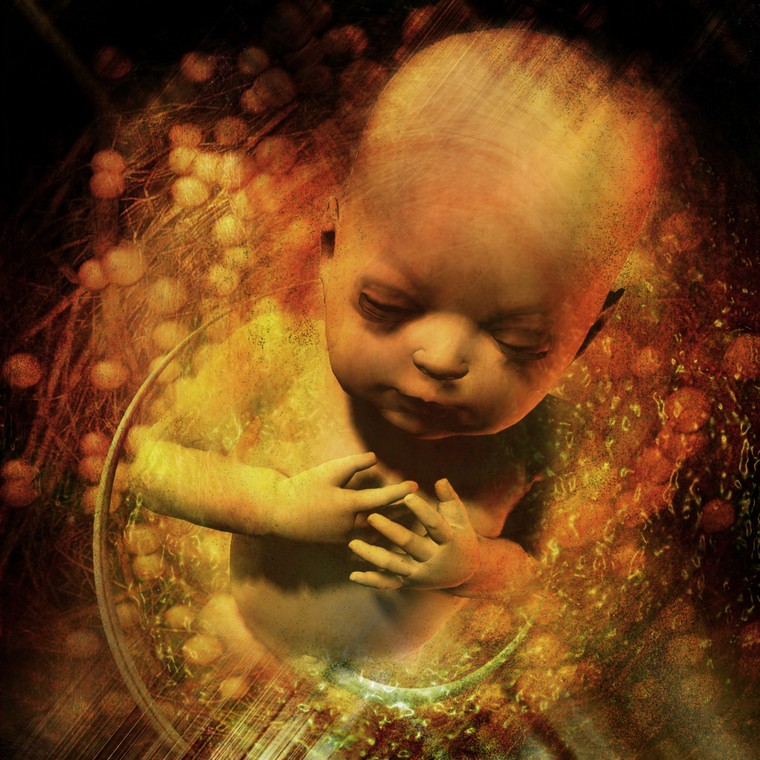
The Foetus Goes Public looks at how images of embryos and foetuses shape our understanding of life and reproduction.  This exhibition tells the fascinating story of how the foetus moved from obscure medieval manuscripts to become a public icon in the twentieth century that, today, is available to everyone at any time through the internet. 

Dr Lutz Sauerteig from the Centre for the History of Medicine and Disease will officially open the exhibition on 7th October at 1.30 pm. 

The exhibition is accompanied by a series of public lectures :

Prof John McLachlan (School of Medicine and Health), ‘Imagining the Embryo’ (21 October, 12.45pm, Holliday Building, Room A011).

Dr Nadja Reissland (Department of Psychology), ‘Fetal Crying: Is the Fetal Cry Face Gestalt Associated with Prenatal Depression and Attachment?’ (11 November, 10.00 am, Wolfson Research Institute, Room F009).

Dr Sebastian Pranghofer (CHMD and Department of Philosophy), ‘Personhood Before Birth? Early Modern Images of the Unborn’ (25 November, 12.45pm, Holliday Building, Room A015/016). 

Entry to the exhibition and the lectures is free. 

For more information, contact Rachel Simpson on telephone 0191 3340700, email: rachel.simpson@durham.ac.uk or visit http://www.dur.ac.uk/chmd/

Best wishes 

Rachel Simpson

Administrator/Outreach Officer
Centre for the History of Medicine and Disease
Wolfson Research Institute, Durham University
Queen’s Campus, University Boulevard
Stockton-on-Tees TS17 6BH
Tel: 0191 334 0700

Posted in Announcements, Exhibitions | Tagged , , , , | Leave a comment

Royal College of Midwives archives now searchable via the Archives Hub

A message from the Project Archivist at the RCOG , Clare Sexton:

The top-level descriptions of organisational records of the Royal College of Midwives are now searchable via the Archives Hub: http://archiveshub.ac.uk/.

This is the direct link to the overview to the collection –  http://archiveshub.ac.uk/data/gb1538rcm

Kind regards,

Clare Sexton
Project Archivist

Royal College of Obstetricians and Gynaecologists
27 Sussex Place
Regents Park
London
NW1 4RG

020 7772 6263

Posted in Announcements, Uncategorised | Tagged , , , | Leave a comment

Hippocrates!

Listen to Helen King discussing Hippocrates on ‘In Our Time’ with Melvyn Bragg (and Vivian Nutton and Peter Pormann).  Broadcast on Radio 4 on 15/09/11; now available via the BBC website.

With thanks to Tania McIntosh for signposting this programme on MIDWIFERY-HISTORY.

Posted in Announcements, Discussions | Tagged , , | Leave a comment

Good news – RCM archives accessible again after more than three years in storage

The RCM has now transferred its archives and library books to the RCOG library in Regent’s Park, London.

The archives have been catalogued, and anyone wishing to view the material is invited to contact the temporary archivist, Clare Sexton, at the RCOG.

The draft catalogue is now available to De Partu members via the Members’ area of the website.

Some of the De Partu steering group members were recently invited to the RCOG,  and enjoyed viewing some of the material. Clare is working on some resource guides to the collection that will soon appear on the RCOG website: http://www.rcog.org.uk/what-we-do/information-services/resource-information.

Some of the speakers: Professor Cathy Warwick, Dr Janette Allotey, Professor Helen King and Canon Julia Allison, with Claire Sexton (temporary archivist who has catalogued the RCM archives). Launch of the Royal College of Midwives archives at the Royal College of Obstetricians & Gynaecologists library, Sussex Place, Regent's Park, London. November 4th 2011.

The collection is now completely accessible to RCM members. Others are welcome to view them in the reading room at the RCOG by prior arrangement. Clare can arrange for items to be retrieved in advance of your visit.

The catalogue will soon be freely available via the Archives Hub: http://archiveshub.ac.uk.

Posted in Announcements | Tagged , , , | Leave a comment

‘Who Do You Think You Are?’ episode 21/09/11

We are informed that the Robin Gibb episode of ‘Who Do You Think You Are?’ will now be shown on Wednesday 21st September 2011 at 21:00. This is due to changes being made to the schedules by the BBC.

Wall to Wall Media (the producers) hope that you will be tuning in.

The company has expressed thanks to De Partu  and members of the MIDWIFERY-HISTORY JISCmail list for the assistance given to the researchers for the Robin Gibb episode, in which one of Robin’s ancestors, who was a midwife in Salford, is to be featured.

'Who do you think you are?' programme dates autumn 2011


Posted in Announcements | Tagged , , , , , | Leave a comment

Of men-midwives, murderers, and historians …

The work of Don Shelton, featured in his article ‘The Emperor’s New Clothes’, Journal of the Royal Society of Medicine 103 (2010) 46–50., where he claims that the eighteenth-century men-midwives William Smellie and William Hunter had women murdered to order, to provide the illustrations for their impressive atlases of obstetrics, has given rise to considerable controversy.

Helen King discusses his work in a recent article ‘History WIthout  Historians? Medical History and the Internet‘, Social History of Medicine, published online ahead of print 8th June 2011, which she has based on a paper delivered at the De Partu colloquium held in Manchester in June 2010.  She argues that Shelton’s claims raise fresh questions about how medical history is generated, presented and evaluated in the media and, in particular, on the internet. She traces the generation and subsequent reception of what, for some, has now become a ‘historical fact’, in order to illustrate how attempts by medical historians to engage with policy and with the public exist alongside a shift towards the deprofessionalisation of history.


Posted in Announcements, Journal article, Publications | Tagged , , , | Leave a comment

Bob Woods RIP

Regrettably, I have been informed that Bob Woods, John Rankin Professor of Geography at the University of Liverpool, has died. Some of you will have met him last year. Bob became an active supporter of De Partu in 2009. He attended the first annual lecture and was involved as an ‘expert’ at the first colloquium. His academic interests included historical demography and trends in fetal mortality, and his publications included Death before Birth (2009).
I have included below a link to Bob’s obituary from Liverpool University, kindly sent by Julia Allison.
RIP Bob.
Janette Allotey


Posted in Announcements | Tagged | Leave a comment

De Partu at ICM 2011

De Partu at ICM 2011

Dr Tania McIntosh, Secretary of De Partu (centre) with Professor Billie Hunter, member of De Partu Steering Group (right) and Dr Jayne Marshall, first member of De Partu, in front of poster at the ICM in Durban, South Africa, 19-23 June 2011

The history of midwifery was well represented at the conference with not only the poster advertising our work, but an oral history workshop run by Billie and Tania, and a paper given by Tania on the history of English district midwifery.  The workshop was over-subscribed, and generated a real buzz about the possibilities of history.  Several people talked of using oral history, as well as written sources, to explore the history of indigenous and traditional midwives.

Posted in Events, International, Miscellaneous, Poster | Tagged , , , , | Leave a comment

“They gave us hope again”: Dachau concentration camp memorial site

On the 29th of April, which is the 65th anniversary of the liberation of the Dachau Concentration Camp, the exhibition “They gave us hope again” was opened at the Dachau Concentration Camp Memorial Site. The exhibition is dedicated to an historical aspect of the Dachau Concentration Camp which has received only little consideration hitherto: the fate of female prisoners, among whom there were also pregnant women. Between December 1944 and February 1945, seven Jewish women brought children into the world amidst the terror at Kaufering I, a satellite camp of the Dachau Concentration Camp – all of them survived.

While pregnancies were not uncommon in concentration camps, women and their children were usually murdered. In order to clarify the exceptionality of these seven mothers surviving in the murderous concentration camp system, the exhibition implements the stories of the persecution of these women in historical context.

The biographies of the women are presented in seven parts: life before deportation, arrival and imprisonment at the concentration camps Auschwitz and Plaszów, transfer to the Dachau satellite camps, their experiences as female prisoners, the discovery and handling of their pregnancy and the births of their children at Kaufering I, the conduct of the SS, the evacuation of the camp and their liberation in Dachau as well as their lives after the Holocaust. All seven women were from Hungary or from regions annexed by Hungary and were already pregnant at the time of their deportation. They survived the selection process at Auschwitz and other concentration camps until arriving at the Dachau satellite camp Kaufering I in early December 1944, after discovering the pregnancy. They brought their children into the world there under catastrophic conditions.

After giving birth, the mothers Eva Fleischmannovà, Sara Grün, Ibolya Kovács, Elisabeth Legmann, Dora Löwy, Magda Schwartz and Miriam Rosenthal formed a so-called Schwangerenkommando (pregnant unit) and were forced to work in the prisoners’ laundry. As late as 13 March 1945, the head SS camp physician at the Dachau Concentration Camp issued an order for the mothers to be transferred to the Bergen-Belsen death camp. The order, however, was not carried out.

The exhibition can be visited from 30th April 2010 to 31st May 2011.

Guided tours for groups through the exhibition can be requested under: bildung@kz-gedenkstaette-dachau.de

Dachau Concentration Camp Memorial Site
Alte Römerstraße 75
85221 Dachau

Posted in Announcements, Exhibitions, Miscellaneous | Tagged , , , | Leave a comment

Report of the De Partu and United Kingdom Centre for the History of Nursing and Midwifery (UKCHNM) first history of childbirth colloquium held on 23rd June 2010

The De Partu History of childbirth research group aims to provide a supportive network for active researchers working on research projects concerned with the history of childbirth and human reproduction or the history of midwifery.

The most recent event, a history colloquium, was held in June 2010. A report follows by Julia Allison, freelance historian and PhD student, University of Manchester and Janette Allotey:

On a gloriously sunny day, a diverse group of academics, researchers and practising midwives gathered in the Kanaris Lecture Theatre at Manchester Museum for the inaugural De Partu annual history of childbirth research colloquium.  

A lively morning programme included presentations on a variety of topics including menstruation and how it was accounted for in early modern England (Sara Read), childbirth and midwives in rural Elizabethan East Anglia (Julia Allison), the use of the vectis in midwifery practice (Louise Jenkins), and eighteenth-century midwifery education in the Free Hanseatic City and Lübeck, presented by our German guest Christine Loytved, from the University of Osnabrück. 

Following a delicious lunch and an opportunity to network, Samuel Alberti from the Centre for Museology, Manchester Museum, presented a short account of the history of the museum, its design and its collections. Resuming the midwifery theme, Helen Bryers gave a paper on the development of maternity services in the Gàidhealthachd (Highlands and Islands of Scotland) 1912 – 1967. Finally, a thought-provoking paper was given by Helen King in which a recent sensationalist claim that the eighteenth-century men midwives William Harvey and William Smellie were murderers was skilfully deconstructed. This led to a lively debate, raising issues about the nature of ‘expert authority’, the conduct of historical research in the age of the internet and peer review processes. 

This new academic forum offered attendees from a wide variety of different disciplines an ideal opportunity to network and to share their wide and rich range of expertise in the field. These events, which will take place on an annual basis, aim to enrich future work by fostering informal support and peer review, interdisciplinary learning and collaboration.

Posted in De Partu colloquium, Events | Tagged , , , | Leave a comment